
Anúncios
Master Karate From Your Living Room
Start Training Today
Karate has captivated millions worldwide as one of the most respected martial arts disciplines, blending physical prowess with mental discipline and philosophical depth. For decades, learning this ancient Japanese art form required finding a local dojo, committing to rigid class schedules, and investing significant time and money. Today’s digital revolution has transformed how we access education, and karate instruction is no exception.
Online karate lessons have emerged as a powerful alternative for aspiring martial artists who crave flexibility, affordability, and quality instruction. Whether you’re a complete beginner curious about self-defense, a parent seeking activities for your children, or someone returning to martial arts after years away, digital platforms now offer comprehensive training that fits seamlessly into modern lifestyles. 🥋
Why Online Karate Lessons Are Revolutionizing Martial Arts Training
The traditional dojo experience carries undeniable value, but online learning platforms have democratized access to quality karate instruction in unprecedented ways. Geographic limitations no longer determine your training options, and you’re not restricted to whatever instructors happen to operate near your home.
Digital karate lessons provide remarkable flexibility that traditional settings simply cannot match. You can train at 5 AM before work, during lunch breaks, or late at night after putting the kids to bed. This scheduling freedom eliminates one of the biggest barriers preventing people from starting or continuing their martial arts journey.
Cost considerations also make online training attractive. Traditional dojos typically charge monthly memberships ranging from $100 to $200, plus additional fees for belt testing, tournaments, and equipment. Many online platforms offer comprehensive curriculum access for a fraction of this cost, with some even providing free foundational content.
Learning at Your Own Pace Without Pressure
One significant advantage of online karate instruction is the ability to progress according to your personal learning curve. In traditional classes, you might feel rushed to keep pace with classmates or embarrassed when struggling with techniques others master quickly. Digital lessons allow unlimited repetition of difficult movements until muscle memory develops naturally.
This personalized pacing proves especially valuable for adult beginners who often feel self-conscious learning alongside children or more experienced practitioners. You can practice basic stances hundreds of times in private before ever demonstrating them to others, building confidence alongside competence.
What You’ll Actually Learn in Quality Online Karate Programs
Comprehensive online karate courses cover the same fundamental elements taught in traditional dojos, structured to build skills progressively from absolute beginner to advanced practitioner. Understanding what these programs include helps you evaluate options and set realistic expectations.
Fundamental Stances and Footwork 👣
Every karate journey begins with proper stance work. Online lessons typically start with the basic stances that form the foundation of all karate movement: zenkutsu-dachi (front stance), kiba-dachi (horse stance), kokutsu-dachi (back stance), and neko-ashi-dachi (cat stance). Quality video instruction breaks down weight distribution, knee alignment, foot positioning, and posture for each stance.
Footwork drills teach you how to transition smoothly between stances while maintaining balance and power generation. These movement patterns might seem simple initially, but they’re critical for everything that follows in your training.
Striking Techniques and Hand Positions
Once you’ve developed stable stances, online curricula progress to striking techniques. You’ll learn to form a proper fist (seiken) and execute fundamental punches like the straight punch (choku-zuki), reverse punch (gyaku-zuki), and jab (kizami-zuki). Each technique receives detailed breakdown covering chambering position, hip rotation, extension, and retraction.
Beyond punching, you’ll explore various hand strikes including knife-hand (shuto), ridge-hand (haito), back-fist (uraken), and palm-heel (teisho). Video demonstrations from multiple angles help you understand subtle details that make the difference between ineffective movements and powerful strikes.
Kicking Fundamentals and Advanced Techniques 🦵
Karate’s iconic kicks receive thorough attention in online programs. Beginning with front kicks (mae-geri), you’ll progressively learn side kicks (yoko-geri), roundhouse kicks (mawashi-geri), back kicks (ushiro-geri), and crescent kicks (mikazuki-geri). Each kick involves specific chambering, execution, and recovery phases that instructors explain in detail.
Advanced online courses eventually introduce jumping and spinning kicks, though these require solid mastery of basics first. Quality programs emphasize that flashy techniques mean nothing without proper fundamental execution.
Blocking and Defensive Movements
Karate isn’t purely offensive—defensive techniques receive equal emphasis in balanced training programs. You’ll learn age-uke (rising block), gedan-barai (downward block), soto-uke (outside block), and uchi-uke (inside block), along with the footwork and body positioning that makes these blocks effective.
Understanding defensive timing and distance management (ma-ai) transforms blocking from static movements into dynamic defensive strategies. Online instructors often use slow-motion video and multiple camera angles to illustrate these crucial concepts.
Kata: The Moving Meditation of Karate Forms
Kata represents one of karate’s most distinctive training methods—predetermined sequences of movements that encode defensive and offensive techniques against multiple imaginary attackers. These forms serve as moving textbooks, preserving techniques and principles across generations.
Online karate programs typically teach kata progressively, starting with basic forms like Taikyoku Shodan or Heian Shodan (depending on your style). Each kata receives comprehensive instruction covering the sequence of movements, proper rhythm and timing, breathing patterns, and the practical applications (bunkai) of each technique.
The beauty of learning kata online is the ability to pause, rewind, and review sections repeatedly. You can practice the first half of a form until it’s ingrained before moving to the second half, or focus exclusively on transitions where you struggle. Many platforms provide both mirror-view and standard-view demonstrations to simplify following along.
Understanding Bunkai: Practical Applications
Advanced online courses don’t just teach kata movements—they explain bunkai, the fighting applications hidden within forms. This analysis reveals how a specific sequence in kata might represent a defense against a grab, a throw, or a striking combination. Understanding bunkai transforms kata from dance-like movements into practical self-defense scenarios.
Building Strength, Flexibility, and Conditioning for Karate 💪
Effective karate requires more than technique knowledge—you need the physical attributes to execute movements powerfully and safely. Quality online programs incorporate conditioning components specifically designed for martial arts development.
Karate-Specific Strength Training
Unlike general fitness programs, karate conditioning emphasizes functional strength for martial arts movements. You’ll encounter exercises like push-ups on knuckles (to strengthen fists), deep stance holds (for leg endurance), and core work tailored to rotational power generation.
Many online instructors provide bodyweight-focused conditioning routines requiring minimal equipment, making home training practical. These workouts complement technical practice, building the physical foundation for advanced techniques.
Flexibility Work for Higher Kicks and Injury Prevention
Flexibility training features prominently in comprehensive online karate programs. Dynamic stretching routines prepare muscles for training sessions, while static stretching work improves range of motion over time. Special attention goes to hip flexibility (crucial for high kicks) and hamstring flexibility (preventing common injuries).
The privacy of home training actually benefits flexibility work—many people feel self-conscious stretching in public settings. Online guidance helps you stretch safely and effectively without an audience.
Choosing the Right Online Karate Platform for Your Goals 🎯
Not all online karate instruction offers equal quality or value. Understanding what distinguishes excellent programs from mediocre ones helps you invest your time and money wisely.
Instructor Credentials and Teaching Experience
Examine instructor backgrounds carefully. Look for teachers with legitimate black belt ranks (preferably 3rd dan or higher) from recognized karate organizations. Teaching experience matters as much as technical skill—a talented martial artist isn’t automatically an effective instructor.
The best online instructors demonstrate teaching ability through clear explanations, logical curriculum progression, and attention to common mistakes beginners make. Watch free sample lessons to assess teaching style before committing financially.
Curriculum Structure and Progression
Quality programs organize content systematically, building new skills on previously learned foundations. Avoid platforms that simply dump random technique videos without clear pathways from beginner to advanced levels.
Look for programs that follow established karate curricula, typically organized around belt ranking systems. Even if you’re not pursuing formal rank, this structure ensures comprehensive, logical skill development.
Video Quality and Production Values
Technical production quality significantly impacts learning effectiveness. High-definition video, multiple camera angles, slow-motion demonstrations, and clear audio all enhance comprehension. Poor lighting, shaky camera work, or inadequate viewing angles make learning unnecessarily difficult.
Modern platforms increasingly offer interactive features like progress tracking, technique checklists, and community forums where students ask questions and share experiences.
Maximizing Your Online Karate Training Results
Simply subscribing to an online karate platform doesn’t guarantee progress—you’ll need intentional practice strategies to develop genuine skills.
Creating Your Training Space
Designate a specific area for karate practice with adequate space for kicks and movements in all directions. A minimum of 8×8 feet works for most techniques, though more space is better. Clear the area of furniture, breakables, and tripping hazards.
Consider flooring carefully. Carpet provides cushioning but can catch toes during pivots. Hardwood or tile allows better footwork but offers less impact absorption. Many practitioners use puzzle mats (like those in children’s play areas) for an ideal balance of traction and cushioning.
Training Equipment Worth Considering 🥊
While karate requires minimal equipment, certain items enhance home training:
- Heavy bag or standing bag: Develops striking power and conditioning
- Focus mitts or strike pads: Useful if training with a partner
- Full-length mirror: Essential for checking technique and form
- Resistance bands: Support strength training and stretching
- Karate gi (uniform): Not necessary initially but adds authenticity and proper feel
Establishing Consistent Training Schedules
Consistency trumps intensity for long-term skill development. Training 20-30 minutes daily produces better results than sporadic two-hour sessions. Schedule training appointments with yourself and treat them as non-negotiable commitments.
Many successful online students train first thing in the morning before daily responsibilities create excuses. Others prefer evening sessions to release work stress. Experiment to discover what schedule you’ll actually maintain long-term.
Overcoming Common Challenges in Self-Directed Karate Learning
Online training offers tremendous advantages but presents unique challenges requiring proactive solutions.
Maintaining Motivation Without Classmates
The social accountability of traditional dojos helps sustain motivation—showing up when you don’t feel like it because classmates expect you. Self-directed online training requires internal motivation and discipline.
Combat isolation by joining online communities associated with your training platform. Many programs include forums, Facebook groups, or Discord servers where students share progress, ask questions, and encourage each other. Some even organize virtual training sessions where students practice simultaneously via video chat.
Setting concrete goals provides additional motivation. Rather than vague aspirations to “get better at karate,” establish specific objectives like “master Heian Shodan by March” or “achieve full front splits within six months.”
Ensuring Proper Technique Without In-Person Correction 🔍
One legitimate concern about online learning involves developing bad habits without immediate instructor correction. Address this through several strategies:
Record yourself performing techniques and compare your execution to instructor demonstrations. This video review reveals discrepancies you can’t feel during practice. Many online platforms allow students to submit videos for instructor feedback, bridging the gap between self-directed learning and personal instruction.
Practice movements slowly and deliberately at first, prioritizing precision over speed or power. Muscle memory develops from repetition—make sure you’re repeating correct movements rather than ingrained errors.
Progressing to Partner Drills and Sparring
Eventually, solo training reaches limitations—certain skills require partners. Timing, distance management, and adaptive responses to unpredictable opponents can’t be fully developed alone.
Some online students address this by supplementing digital instruction with occasional dojo visits for sparring and partner work. Others form small training groups with fellow online learners in their area. Even practicing with willing family members (with appropriate safety precautions) provides valuable partner training experience.
Complementing Online Learning With Traditional Dojo Experience
Online and in-person training aren’t mutually exclusive—many practitioners combine both approaches for maximum benefit. Your online training can serve as your primary instruction source while attending occasional dojo sessions for testing, sparring, or seminars.
This hybrid approach offers flexibility and affordability of online training while providing periodic validation of technique and the irreplaceable experience of working with diverse partners. Some traditional dojos now explicitly accommodate this arrangement, offering drop-in rates rather than requiring full membership.
The Mental and Philosophical Dimensions of Karate 🧘
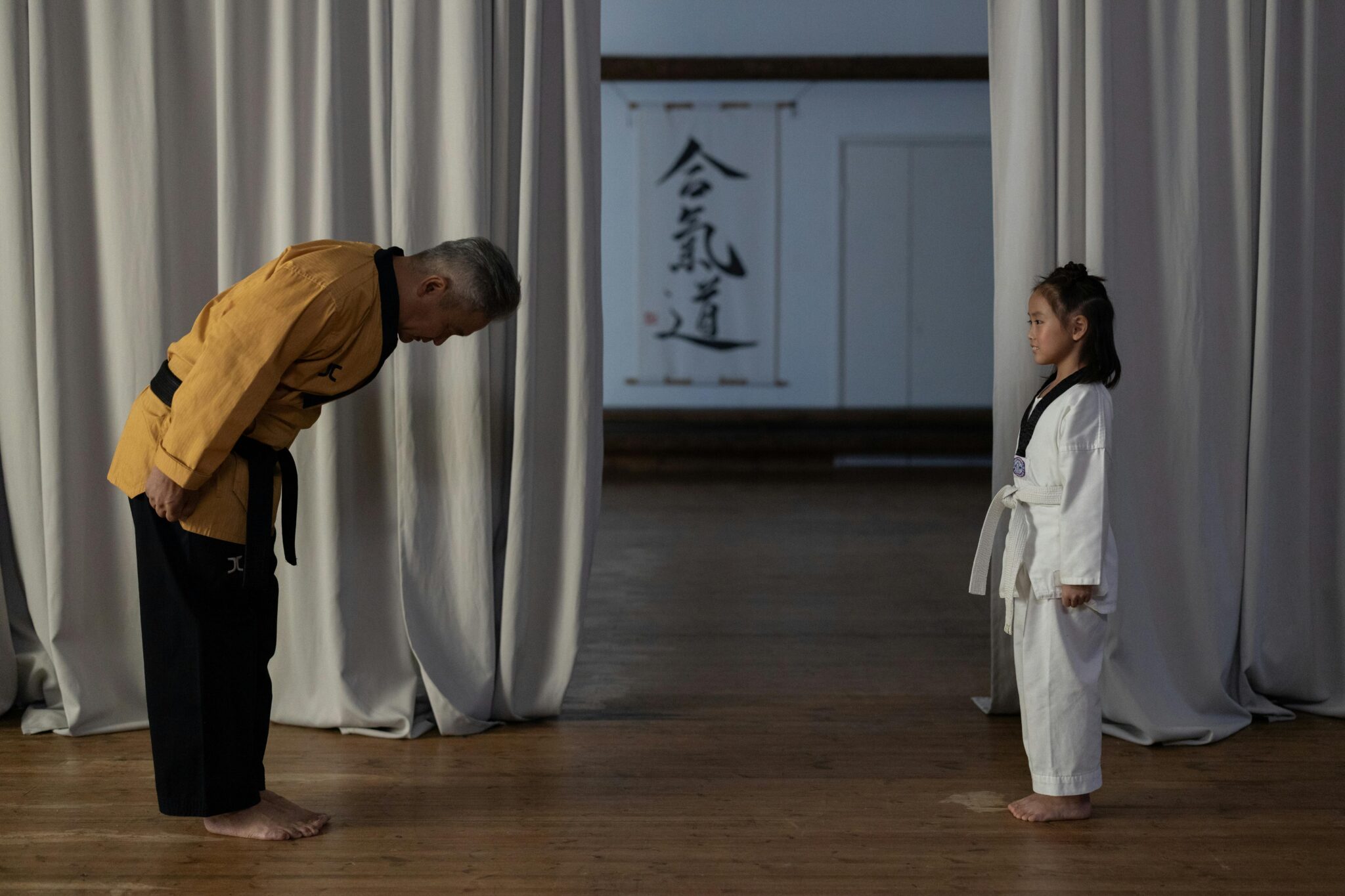
Authentic karate training extends far beyond physical techniques to encompass mental discipline, character development, and philosophical principles. Quality online programs address these dimensions, not just the mechanical aspects of strikes and kicks.
Traditional concepts like mushin (empty mind), zanshin (continued awareness), and fudoshin (immovable spirit) provide frameworks for applying karate principles beyond the training floor. Online instructors often dedicate portions of their curriculum to these philosophical elements, connecting ancient wisdom to modern life challenges.
Meditation and breathing exercises (ibuki breathing in some styles) develop the mental focus and calm that distinguish true martial artists from mere fighters. These practices translate directly to stress management, improved concentration, and emotional regulation in daily life.

Starting Your Online Karate Journey Today
The barriers to beginning karate training have never been lower. You don’t need expensive equipment, a nearby dojo, or even prior athletic experience. What you need is curiosity, commitment, and willingness to practice consistently.
Begin by exploring available online platforms—many offer free trial periods or introductory content. Watch several lessons to assess teaching styles and curriculum quality. Don’t expect perfection immediately; karate mastery unfolds over years, not weeks. Embrace the beginner’s mindset, celebrate small improvements, and trust the process.
Your online karate journey connects you to a centuries-old tradition of self-improvement through martial discipline. Every practice session—whether fifteen minutes or an hour, whether you feel energized or exhausted—contributes to your development as a martial artist and as a person. The question isn’t whether you’re ready to start. The question is: what are you waiting for? 🥋✨
